
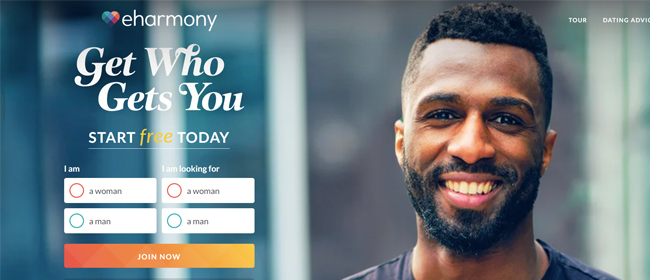

What we checked
This comparison uses current official eHarmony and Academic Singles product, membership and help pages, plus Lovulu's full reviews and editorial methodology. We distinguish company claims from our conclusions. Features, offers and checkout terms can change, so the final signed-in screen controls any purchase.
Our Verdict: eHarmony Wins Overall, Academic Singles Wins Its Niche
Choose eHarmony if your first priority is a serious relationship and you want a broad pool organized by structured compatibility. Its Compatibility Quiz, Personality Profile, Discover list and Compatibility Scores create the clearer guided journey. The larger general audience also gives it an important practical advantage outside major professional centers.
Choose Academic Singles if education, career rhythm and intellectual curiosity are central partner filters. Its questionnaire, match scores and searchable education and lifestyle criteria can reduce irrelevant browsing. That benefit depends on local density, and the brand name should never be treated as independent proof of a member's degree, occupation or income.
Pick eHarmony if...
- You want a broad relationship-minded audience.
- You prefer guided suggestions to extensive manual filtering.
- You value a detailed compatibility questionnaire.
- You live outside a large professional metro.
- Education matters, but it is not your defining filter.
Pick Academic Singles if...
- You want educated and career-oriented prospects.
- You prefer direct criteria alongside match scores.
- You need professional lifestyle compatibility.
- You have enough relevant users in your area.
- You are willing to complete a detailed profile.
eHarmony vs Academic Singles at a Glance
This table compares the role each product plays, not the quality of every person inside it. The winner in your city depends on recent, relevant and responsive profiles within a distance you can actually travel.
| Category | eHarmony | Academic Singles | Winner |
|---|---|---|---|
| Best for | Broad serious relationships | Educated, professional dating | Depends on priority |
| Core method | Guided compatibility matching | Personality matching plus search | eHarmony for guidance |
| Audience breadth | Broad ages, jobs and backgrounds | Narrow professional positioning | eHarmony |
| Education focus | One factor among many | Central search and brand signal | Academic Singles |
| Free personality results | Personality Profile and suggestions | Assessment and suggested partners | Tie |
| Free communication | Likes and limited messaging | Communication mainly Premium | eHarmony |
| Full photos | Premium | Premium | Tie |
| Paid messaging | Selected plan's contact allowance | Premium | Tie |
| Search control | Enhanced search with Premium | Education and lifestyle criteria | Academic Singles |
| Video calls | Check current account tools | Premium after some messages | Academic Singles |
| Small-town potential | Broader pool helps | Can require wider distance | eHarmony |
| Best free test | Quiz, matches, Likes | Questionnaire, matches, search preview | Test both |
How We Compared the Dating Sites
We scored both as tools for finding a serious partner, not as collections of flashy features. Audience relevance comes first. A precise questionnaire cannot create a good date if the local pool is too small, and a large pool is inefficient if its members do not share your intellectual, professional or relationship priorities.
We also separate a site's positioning from member verification. Academic Singles attracts users who value education and career success, but that does not automatically authenticate a resume. eHarmony calculates compatibility, but a high score does not guarantee kindness, honesty or chemistry. Our verdict rewards useful decision support while preserving the reader's responsibility to verify people and terms.
Audience: Broad Compatibility or Professional Focus?
Both brands speak to adults who want more than swiping, but they enter the problem from different directions. eHarmony begins with a large general relationship audience and sorts it through compatibility. Academic Singles begins with an educated, professionally oriented identity and then applies personality matching and search criteria.
Who is eHarmony best for?
eHarmony fits people who know they want a committed relationship but do not want a profession or degree to define the entire pool. Its current signup and matching journey consider personality, interests, habits, communication and partner preferences. That range can work for teachers, entrepreneurs, nurses, tradespeople, researchers, parents and retirees who share relationship values without sharing a career label.
The broader pool is particularly useful in suburbs, small cities and rural areas. A specialist site can contain highly relevant people nationally while offering only a few realistic prospects nearby. eHarmony does not remove this problem, but a wider audience gives the filters more material to work with. Users with strict age, distance, religion, smoking or family plans should still inspect actual suggestions before subscribing.
Who is Academic Singles best for?
Academic Singles is designed for people who want education, ambition and intellectual interests to matter early. That can be valuable for professionals whose schedule, financial habits, cultural interests or career mobility shape a relationship. It may also appeal to people who prefer longer profiles and deliberate matching over rapid visual browsing.
Do not turn this preference into status shopping. A degree does not predict empathy, communication, curiosity or respect. A nontraditional career does not signal a lack of intelligence. Use education and profession as context for lifestyle compatibility, then evaluate how someone listens, solves problems and treats other people.
| Your priority | Better first test | Reason |
|---|---|---|
| Largest practical local pool | eHarmony | Broader positioning usually creates more variety |
| Career-compatible lifestyle | Academic Singles | Professional identity is central to the product |
| Guided relationship matching | eHarmony | Compatibility results organize the whole journey |
| Direct education criteria | Academic Singles | Education and habits appear in search controls |
| Uncertain preferences | eHarmony | Broader suggestions can reveal unexpected fit |
| Very specific professional niche | Test both | Local inventory matters more than branding |
Matching Systems and Personality Tests
eHarmony's Compatibility Quiz is the most recognizable difference. New users answer questions about behavior, values, relationship expectations, lifestyle and communication. The service turns these answers into a Personality Profile and Compatibility Scores, then displays suggested people in Discover. This process is useful when a dater wants guidance and is willing to answer honestly.
The score is a conversation filter, not a verdict. Two people can share modeled traits and still disagree about children, debt, location or the pace of commitment. A lower score can still hide useful chemistry. Use the explanation behind a suggestion to form better questions, but read the full profile and observe reciprocity.
Academic Singles also uses a questionnaire to create a personality assessment and suggested partners. Its official site says the assessment and list of potential partners are free. The product then adds more direct criteria such as age, region, education, smoking and drinking habits. The result feels like a blend of matchmaking and controlled search.
That blend helps a user who can articulate practical requirements. For example, someone with a demanding medical schedule might care about another person's flexibility more than an identical profession. A researcher planning an international move may need openness to relocation. Search criteria can start the shortlist, while profile text reveals whether the label represents a compatible life.
How to answer either questionnaire well
Answer for ordinary behavior, not an idealized dating persona. If you usually need quiet after work, do not present yourself as constantly social. If career is important but weekends are protected, say both. Consistency produces more useful matches and makes the written profile believable.
Avoid gaming answers toward the person you imagine others want. This creates attractive but irrelevant results. Review the completed profile and correct obvious misunderstandings where possible. Then compare three suggested profiles: can you explain why each one fits, and do the visible differences feel manageable? A system that produces understandable suggestions is more useful than one that only displays a large score.
Education, Career and Intellectual Compatibility
Academic Singles clearly wins this category because professional and education-based intent is part of its identity. Search settings can include education and lifestyle habits, and profiles invite details that help users compare interests and pace of life. This reduces the awkwardness of asking immediately about work or study.
eHarmony can still connect educated professionals. Its broader matching model may even be better when you care about curiosity, emotional intelligence and compatible values more than a credential. The difference is efficiency: Academic Singles places professional context closer to the front; eHarmony asks compatibility to carry more of the filtering.
Important reality check
Neither brand name should be treated as proof of a degree, salary, employer or relationship status. Profile fields are generally self-reported unless a service clearly marks an item as verified. Never send money, employment documents, academic records or investment credentials to a match.
Intellectual compatibility is also broader than formal schooling. Look for curiosity, willingness to revise an opinion, clear communication and interest in your world. Ask what someone has learned recently, how they spend an unstructured Sunday or which problem at work they enjoy solving. These prompts reveal thinking style without turning the conversation into an interview.
Career compatibility needs practical questions. Discuss travel, working hours, retirement plans, debt, relocation and the emotional space each person has for dating. Two ambitious people may admire each other while never sharing time. A professional niche is most useful when it leads to honest conversations about how a relationship fits into real calendars.
What Can You Do for Free?
Both services offer free registration, but neither should be described as a traditional unrestricted free trial. eHarmony Basic has no published time limit. It lets users take the quiz, receive match suggestions, browse with restrictions and send Likes, with some limited initial communication. Full photos, advanced search and unlimited personalized messages require Premium.
Academic Singles says the questionnaire, personality assessment and list of suggested partners are available free and without obligation. Its current public pages place full profile and photo access, chat, unlimited messages, favorites and video calls behind Premium. The free account is useful for judging the interface and local pool, but it is not the complete dating experience.
| Free action | eHarmony Basic | Academic Singles free account |
|---|---|---|
| Create a profile | Yes | Yes |
| Complete questionnaire | Yes | Yes |
| Receive suggestions | Yes | Yes |
| View all profile photos | No | No |
| Unlimited personalized messages | No | No |
| Useful before payment? | Yes, for match depth and fit | Yes, for niche and local inventory |
How to use the free accounts properly
Use the same honest age, relationship goal, distance and lifestyle preferences. Complete both profiles to a similar level so the comparison is fair. Count profiles you would genuinely contact, not every result. Look for complete text, recent activity signals, realistic distance and consistent intent.
Do not pay just to discover who blurred a photo or sent a vague alert. Build a shortlist of at least five credible prospects first. If a service cannot show enough plausible people during free evaluation, Premium communication will not fix the inventory problem.
Cost, Premium Value and Billing
Do not compare these services using a promotional monthly equivalent alone. A low displayed monthly figure may correspond to a longer total commitment, installment schedule or renewal. Prices can depend on country, promotion, device, selected term and account. Open both live checkouts on the same day and record the full terms.
eHarmony Premium unlocks the parts most users associate with normal dating: full photos, unrestricted personalized messaging and enhanced search. Public eHarmony pages describe multi-month Premium options, but term references can vary across its own help content. The signed-in checkout is the authoritative offer for your account.
Academic Singles Premium unlocks full profiles, all profile photos, unlimited messages, video calls and favorites according to its official FAQ. Its public support content tells users to cancel website subscriptions through the site's cancellation form and app subscriptions through Apple or Google. It also states that deleting the profile or uninstalling the app does not cancel Premium.
| Question | Why it matters | Action before purchase |
|---|---|---|
| What is the total? | Monthly equivalents can hide commitment | Save the final order screen |
| One charge or installments? | Payment timing affects cash flow | Read every billing date |
| Does it renew? | Terms may continue automatically | Record renewal date and amount |
| Where was it purchased? | Web, Apple and Google paths differ | Use the matching cancellation channel |
| Is the pool proven? | Features cannot create local prospects | Shortlist before paying |
Which offers better value?
eHarmony offers better value when its broader pool gives you more compatible candidates and you actively use the guided system. Academic Singles offers better value when its niche removes enough irrelevant profiles to save time. Price without match relevance is meaningless. A cheaper subscription with no plausible local users is expensive; a higher total with several reciprocal prospects may be rational.
Choose the shortest sensible test that unlocks the communication you need, not the longest discount by default. Set a calendar reminder immediately after subscribing. Keep order and cancellation confirmations. Never assume account deletion ends billing.
Profiles, Search, Messaging, Video and Apps
Profile quality
Both services work best when users invest in profile detail. eHarmony turns questionnaire answers and written information into a compatibility-led presentation. Academic Singles emphasizes personal description, preferred type, search criteria and questions that create conversation material. A short generic profile wastes the core advantage of either product.
Academic Singles provides icebreaker questions, a Question of the Day and match scores based partly on preferences and common ground. These tools can make a professionally focused profile feel less like a resume. eHarmony's profile and score explanations are better for understanding why a broad-match suggestion appeared.
Search and discovery
eHarmony is more guided. The Discover list and Compatibility Scores direct attention toward people the system considers relevant. Premium adds enhanced search, but the experience still encourages users to evaluate suggestions. This helps daters who become overwhelmed by hundreds of filters.
Academic Singles offers more explicit criteria for education and habits alongside its matching. This suits users who already know the practical boundaries of a relationship. Apply strict filters one at a time. If age, distance, education, smoking, drinking and appearance are all narrow, an apparently empty service may actually be the result of an overconstrained search.
Messaging and conversation
Both restrict communication on a free account; compare the actual paid package rather than assuming identical allowances. eHarmony Basic can provide Likes and limited contact, while Academic Singles positions unlimited chat as Premium. This makes the prepayment shortlist essential. Once subscribed, message three to five credible profiles with a specific observation and one easy question.
Academic Singles says some system messages can be sent on a member's behalf, including requests to unblur photos and Question of the Day notices. Do not treat every notification as a personally written expression of interest. Evaluate whether the other person answers your actual question and asks something meaningful in return.
Video calls and mobile use
Academic Singles officially lists Premium video calls after a few messages have been exchanged. This can be useful for identity confidence and for professionals with limited time. The call remains a screening tool, not proof of safety. Do not reveal your workplace, home location or sensitive documents on camera.
Both can be used on common mobile platforms and on the web. Judge the workflow you will actually maintain. A polished app is useful only if notifications, profile browsing and messages fit into your routine without creating pressure to respond constantly.
| Task | Better choice | Explanation |
|---|---|---|
| Understand broad personality fit | eHarmony | More prominent guided compatibility journey |
| Filter education and habits | Academic Singles | More direct niche criteria |
| Find options outside a metro | eHarmony | Broader audience can improve local depth |
| Move from messages to video | Academic Singles | Premium video process is clearly documented |
| Avoid endless manual browsing | eHarmony | Discover focuses attention |
| Control a narrow professional search | Academic Singles | Matching and search work together |
Pros and Cons
eHarmony Pros
- Broad serious-relationship audience.
- Deep Compatibility Quiz and visible scores.
- Ongoing free Basic membership.
- Guided suggestions reduce browsing fatigue.
- Better first choice in thinner markets.
eHarmony Cons
- Most photos require Premium.
- Unlimited messaging requires Premium.
- Checkout may involve a longer commitment.
- Less direct education-first positioning.
- Guidance gives users less manual control.
Academic Singles Pros
- Clear focus on educated professionals.
- Free questionnaire and suggested partner list.
- Education and lifestyle search criteria.
- Premium unlimited messages and video calls.
- Icebreakers help start substantive conversations.
Academic Singles Cons
- Narrower local pool can limit choice.
- Full photos and communication require Premium.
- Professional claims remain self-reported.
- Deleting an account does not cancel billing.
- Strict filters can make results feel sparse.
Safety, Privacy and Billing Controls
Dating platforms provide introduction tools, not background investigations. Academic Singles offers blocking, reporting and controlled video calls, and eHarmony provides in-platform contact and reporting tools. None of these eliminates impersonation, financial scams or dishonest relationship status.
Safer routine
- Use a unique password and private email address.
- Keep surname, employer and home address private.
- Exchange several messages before a live call.
- Meet in public using independent transportation.
- Tell a trusted person where and when you meet.
- Save purchase and cancellation confirmations.
Stop when someone...
- Requests money, crypto, gift cards or investment access.
- Pushes you off-platform before basic trust exists.
- Refuses every reasonable live verification.
- Changes age, work, education or relationship details.
- Uses prestige or credentials to silence questions.
- Pressures you for intimate images or secrecy.
Be cautious with workplace information. A job title, city and employer can make someone easy to identify. Describe your field generally until trust develops. Do not send work IDs, diplomas, tax forms or professional account screenshots to prove status.
Academic Singles says profiles may appear across compatible brands operated by the same company while preferences control contact, and that data remains protected within its network. Read the current privacy notice before registering if cross-brand visibility matters to you. On either service, review notification and visibility settings rather than accepting defaults blindly.
Billing safety checklist
Before purchase, capture the selected term, total price, installment schedule, renewal rule and cancellation deadline. Academic Singles explicitly says deleting the profile or app is not cancellation. Website members use its cancellation form, while Apple or Google purchases are managed in the relevant store. For eHarmony, follow the account or app-store process shown for your purchase. Confirm cancellation in writing and check the next statement.
The Best Seven-Day Side-by-Side Test
Free access on both sites is most valuable when you run the same controlled experiment. Start both accounts during a week when you can complete profiles and inspect matches. Do not confuse repeated notifications with local quality.
- Day 1: define success. Write your real age range, distance, relationship goal, family plans and three flexible preferences.
- Day 2: complete both questionnaires. Answer for normal behavior and add comparable profile detail.
- Day 3: audit local depth. Count plausible complete profiles within a distance you would travel twice a month.
- Day 4: compare relevance. Note why each of five suggested people fits and which important questions remain unanswered.
- Day 5: inspect communication paths. Use free Likes or allowed interactions and identify who could receive a thoughtful first message after upgrade.
- Day 6: examine safety and billing. Find report, block, privacy, subscription and cancellation controls before payment.
- Day 7: choose only with evidence. Compare shortlists and live checkout totals. Pay only where the local pool justifies conversation.
| Signal | 0 points | 1 point | 2 points |
|---|---|---|---|
| Relevant recent profiles | 0 to 2 | 3 to 7 | 8 or more |
| Complete profile detail | Mostly thin | Mixed | Mostly specific |
| Education and lifestyle fit | Unclear | Some alignment | Several strong fits |
| Practical distance | Mostly too far | Some workable | Several local |
| Checkout clarity | Total unclear | Needs support check | Term and renewal clear |
Score each platform out of ten. Six or more points plus five genuine prospects is a reasonable threshold for considering Premium. If neither qualifies, improve the profile, relax only one nonessential filter or test another relationship service. Do not buy a longer plan simply because a countdown or discount creates urgency.
Which Site Is Better for Your Situation?
| Dater | Best choice | Why |
|---|---|---|
| Professional in a major city | Academic Singles | The niche is most useful where local density supports it |
| Small-town relationship seeker | eHarmony | A broader pool is usually more practical |
| Wants deep compatibility guidance | eHarmony | Quiz, profile and scores shape discovery |
| Needs direct education filters | Academic Singles | Professional and lifestyle criteria are central |
| Career changer or nontraditional learner | eHarmony | Broader matching avoids credential assumptions |
| Busy executive with narrow availability | Test both | Schedule and proximity must beat brand positioning |
| Over 50 and open to varied backgrounds | eHarmony | Broader age and background potential |
| Wants Premium video after messages | Academic Singles | The process is clearly documented |
Detailed Advice by Life Stage
For professionals in their 20s and early 30s
Career momentum can make Academic Singles attractive, but inspect age distribution locally. A focused professional pool may be excellent in a university or technology center and thin elsewhere. eHarmony's broader audience may reveal people with compatible ambition who use a different education or career path.
Be clear about near-term plans. Mention whether graduate study, relocation, travel or children are likely within a few years. Avoid presenting achievements as a substitute for personality. One sentence about how you spend time away from work often produces better conversation than a list of credentials.
For daters in their 40s and 50s
Both can work well because users in this group often understand their relationship needs. eHarmony can organize preferences involving blended families, retirement direction and lifestyle. Academic Singles can help professionals find people who understand demanding schedules or a strong intellectual identity.
State practical constraints. If you share custody, care for parents, travel frequently or cannot relocate, explain that respectfully. Compatibility cannot solve an impossible calendar. A realistic distance and availability statement saves both people time.
For divorced, widowed or returning daters
eHarmony's guided flow may reduce decision overload after a long break from dating. Academic Singles may feel comfortable for someone who wants profile substance and shared professional context. Neither requires disclosing painful history immediately.
Say what you are ready for now. Discuss past relationships gradually, notice whether questions are respectful and avoid anyone who pushes rapid exclusivity. Live video can provide basic confidence, but emotional readiness becomes visible through patience, consistency and the ability to respect boundaries.
For rural and long-distance daters
eHarmony usually deserves the first test because audience breadth can create more workable matches. Academic Singles may still win if a nearby college, hospital, government center or regional employer supports its niche. Search the distance you would travel repeatedly, not the distance you might accept for one exciting profile.
Before becoming emotionally invested, discuss travel frequency, cost sharing and possible relocation. Use several live calls before booking. Keep travel independent and refundable where possible. Never send transportation money to a person you have not met.
What Neither Site Can Decide
Both platforms organize introductions. Neither can decide whether someone communicates honestly, manages conflict, respects boundaries or has space for a relationship. eHarmony's score models compatibility from answers. Academic Singles' niche improves context. These signals are useful, but neither is a character certificate.
Direct conversations still matter. Discuss commitment, children, location, finances, work intensity, health, family boundaries and everyday routines before the relationship becomes difficult to unwind. These are not all first-message topics. They are checkpoints that should appear naturally as trust grows.
Do not interpret a quiet week as immediate evidence that you need more visibility or a longer plan. Improve the profile, replace weak photos, expand one flexible filter and contact a small number of strong matches thoughtfully. If activity remains poor, leave rather than paying to defend a sunk cost.
How to Build a Profile That Converts Matches Into Conversations
Use three to five current photos with a consistent appearance. Include a clear face, full-body context and one ordinary activity. Avoid large group photos, heavy filters, sunglasses in every image and work badges. Do not show children's faces, mail, vehicle plates or identifiable details inside your home.
Write evidence instead of adjectives. Replace “ambitious” with the project you are building. Replace “curious” with what you recently learned. Replace “family-oriented” with what family time looks like. Academic Singles users should describe life beyond work; eHarmony users should connect questionnaire themes to real routines.
State relationship direction positively. Explain whether you hope for marriage, partnership, children or shared travel. Mention location and schedule limits without sounding defensive. A good first message contains one specific profile observation, one shared point and one easy question. It should feel written for one person.
Measure reciprocity, not attention. A promising match answers the question, adds detail and asks something in return. Views, Likes and automated notifications can feel encouraging but do not predict a date. Stop investing when conversation remains one-sided, inconsistent or pressured.
eHarmony vs Academic Singles FAQ
Is Academic Singles better than eHarmony?
Academic Singles can be better if you specifically want educated, career-focused matches and enough suitable members live nearby. eHarmony is usually the stronger all-around choice for a broader relationship pool and a more guided compatibility experience. Create both free accounts and compare your actual local matches before paying.
Which is better for serious relationships, eHarmony or Academic Singles?
Both target relationship-minded adults. eHarmony is better for broad serious dating and structured compatibility guidance. Academic Singles is better when education, professional lifestyle and intellectual compatibility are important early filters.
Is eHarmony free?
eHarmony has a Basic membership with no published time limit. You can take the Compatibility Quiz, receive suggestions, browse with limits and send Likes. Full photo access, enhanced search and unrestricted personalized messaging require Premium.
Is Academic Singles free?
Registration, the personality questionnaire, personality assessment and an initial list of suggested partners are free according to Academic Singles. Full profiles, all photos, unlimited messages, favorites and video calls are Premium benefits.
Which site is cheaper, eHarmony or Academic Singles?
Neither public landing page gives every visitor one universal price because offers can vary by location, term, promotion, device and account. Compare the final total charge, term, installment schedule and renewal wording shown inside each live checkout.
Can I message for free on eHarmony?
Basic members can send Likes and use limited communication, including an initial message under the current product description. Check the selected Premium plan's contact allowance before paying.
Can I message for free on Academic Singles?
Academic Singles lets free members create a profile and review suggestions, but its official pages position chat and unlimited messages as Premium benefits. Treat free registration as a pool and interface test, not a complete communication trial.
Does Academic Singles verify college degrees or income?
Do not assume that the brand name proves a degree, profession or income. Education and career details in dating profiles should be treated as self-reported unless the service explicitly marks a field as independently verified. Judge consistency and never send money.
Which has more members, eHarmony or Academic Singles?
eHarmony serves a broader general relationship audience, while Academic Singles targets a narrower educated and professional niche. National claims do not reveal how many suitable, recently active people are within your distance, so inspect local results on both free accounts.
Which has the better personality test?
eHarmony provides the more visible and guided compatibility journey through its Compatibility Quiz, Personality Profile, Discover list and Compatibility Scores. Academic Singles also uses a questionnaire and match scores, but adds more direct search criteria for education and lifestyle.
Which is better for professionals over 40?
Academic Singles may save time when career pace, education and intellectual interests are important. eHarmony may provide more age and location depth. The better option is the one that produces several recent, reciprocal matches within a realistic travel radius.
Do eHarmony and Academic Singles renew automatically?
Subscription rules depend on the displayed offer and purchase channel. Record the renewal date, total and cancellation route before paying. Academic Singles explicitly says deleting a profile or app does not cancel Premium, and app-store subscriptions must be canceled through Apple or Google.
Can I use video dating on either site?
Academic Singles officially lists Premium video calls after members exchange some messages. eHarmony emphasizes in-platform communication and its current feature set can vary by platform and account. Check your live account before buying specifically for one feature.
Can either dating site guarantee compatible, educated matches?
No. A score, questionnaire or education filter can improve relevance, but it cannot verify honesty, chemistry, emotional availability or relationship skills. Use live conversation, consistent behavior and safe in-person meetings to evaluate a match.
Final Recommendation
eHarmony is our overall winner. It has the clearer compatibility-led experience and a broader serious-dating audience, which makes it the safest first recommendation for most readers. Choose it when relationship intent matters more than a narrowly professional identity.
Academic Singles is our specialist winner. It deserves the first test when education, career pace and intellectual context are central to attraction, especially in a large professional or university market. Its questionnaire and suggested partner list can be checked before payment.
The most reliable strategy costs nothing: create both accounts, complete both honestly and compare five plausible local profiles. Upgrade only the service that proves it can connect you with relevant people. The better brand on paper is less important than the better shortlist in your city.
Affiliate disclosure: Lovulu may receive compensation when you use a sponsored link. This does not change your price or our editorial standards. No dating site can guarantee a match or relationship.
Sources and Editorial Notes
- eHarmony official tour: Compatibility Quiz, Discover list, Personality Profile, scores and product positioning.
- eHarmony cost and benefits guide: Basic access, Premium features, live pricing path and payment methods.
- eHarmony free-membership FAQ: no published time limit for Basic membership.
- eHarmony photo-access FAQ: Basic photo restrictions and Premium benefits.
- Academic Singles official site: free questionnaire, personality assessment, suggested partner list, search positioning and video calls.
- Academic Singles official FAQ: search criteria, match scores, Premium benefits, messaging, video calls, privacy and cancellation.
- Academic Singles security guidance: live-call, meeting, reporting, blocking and account safety advice.
- Lovulu eHarmony review, Academic Singles review, eHarmony cost guide, eHarmony free guide, sites like eHarmony and eHarmony vs ChristianCafe.
Public product and membership details were checked on September 4, 2026. The account, checkout and app-store terms shown to you control the actual purchase.
Choose your next step
Use these guides to compare suitability, payment and communication before joining:
- eharmony review
- eharmony total cost and renewal
- eharmony free features and trial limits
- alternatives to eharmony
- eharmony versus ChristianCafe
Compare membership options
Academic Singles Cost: Premium and Billing Explained